Naphthalene-Based Superplasticizer (SNF)
The established high-range water reducer for price-driven markets — finished and ready to dose, with batch COA, TDS and SDS from an ISO 9001 certified plant.
What it is
How Naphthalene Superplasticizer Works
A naphthalene-based superplasticizer — also written SNF or PNS, short for sodium naphthalene sulfonate formaldehyde condensate — is a high-range water reducer that disperses cement particles primarily through electrostatic repulsion. It has been the workhorse admixture in many markets for decades, and it remains widely specified because it is predictable and forgiving.
Its practical advantage over PCE chemistry is tolerance. Where cement quality, fines content or aggregate grading fluctuate between batches — common in developing markets — naphthalene tends to keep behaving reasonably while PCE performance swings. Its cost advantage on a per-tonne basis is also real, even though dosage is typically higher.
Its honest limitation is that the usable performance ceiling is lower than PCE: you will not reach the very low water-cement ratios or the same slump-retention controllability. If your project needs those, look at PCE instead. We would rather tell you that now than after a failed trial.
Reported test data
Third-Party Test Results for the SNF Standard Type
Measured by Guangdong Guangye Inspection and Testing Group in April 2025 against GB 8076-2008, dated 2025-04-16.
| Property | Reported result | What it means for your mix |
|---|---|---|
| Water reduction rate | 23% | Solid reduction in mixing water at equal workability. |
| Solid content | 38.04% | Higher solids per tonne than many PCE liquids — relevant when comparing prices. |
| Air content | 1.8% | Low air entrainment; useful where air must stay within tight limits. |
| Chloride ion content | 0.055% | Confirm against your project's chloride limit for reinforced concrete. |
| Total alkali content | 4.42% | Higher than PCE. Evaluate if reactive aggregates or low-alkali specs apply. |
| Sodium sulphate content | 0.12% | Reported for durability and sulphate-related specification checks. |
| Dosage used in test | 2.0% | Trial condition only — establish your own dosage locally. |
We publish the alkali figure deliberately. At 4.42% total alkali, this product will not suit every specification — particularly where alkali-reactive aggregates are present. Flagging it early saves both of us a wasted trial. If your project has a low-alkali requirement, tell us in the first message and we will tell you honestly whether this line fits.
Applications
Where SNF Is Still the Sensible Choice
Naphthalene remains the rational answer in a large share of tropical, cement-variable and price-tendered markets.
General ready-mix concrete
Standard structural grades where purchased cost per batch drives the buying decision.
Mass concrete
Low air content and predictable set behaviour suit large pours and dam or foundation works.
Precast concrete
Adequate strength development for standard elements where very short demoulding cycles are not critical.
Cost-sensitive tenders
Lower unit price per tonne improves tender competitiveness where the specification permits either chemistry.
Variable local cement
Broader tolerance than PCE where cement consistency between deliveries is unreliable.
Second-source supply
A practical backup line when you already buy PCE elsewhere and want redundancy against supply disruption.
Selection guide
SNF or PCE — A Practical Comparison
| Factor | SNF | PCE |
|---|---|---|
| Water reduction | 23% | 29% |
| Total alkali | 4.42% | 0.10% |
| Cement tolerance | High | Moderate |
| Slump retention control | Limited | Wide |
| Price per tonne | Lower | Higher |
Because solid content differs (38.04% versus 23.51%), never compare these on price per tonne alone. Give us your current dosage and landed cost and we will calculate cost per cubic metre for both lines. See the PCE range for the alternative.
Supply conditions
Packing, Documents and Shipping
- Supplied as finished liquid in drums or IBC tanks; flexitank assessed against compatibility and handling conditions.
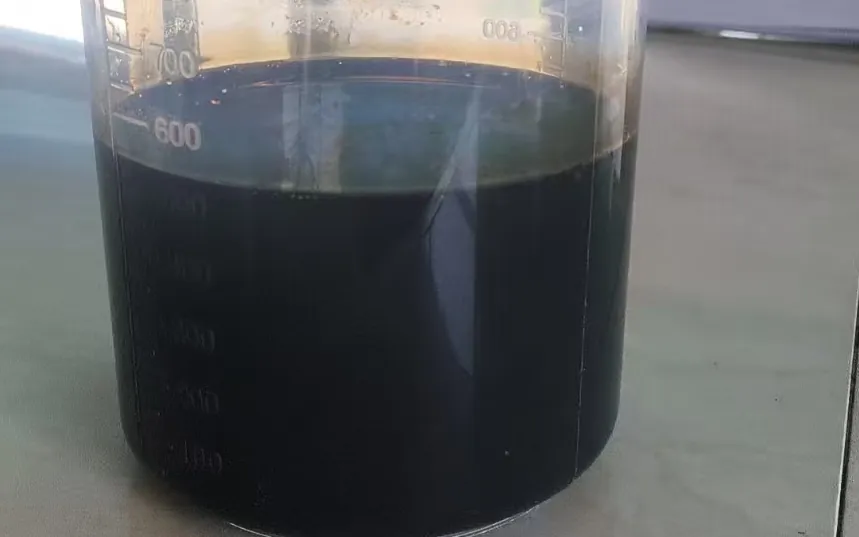
- Appearance: dark brown to black liquid depending on batch — confirm the acceptance criterion in the order specification.
- Batch COA per shipment; TDS and SDS issued in English before order confirmation.
- Flash-point testing documentation available; final sea freight classification confirmed with the carrier against the current SDS.
- Container load calculated from actual density and tare weights, not assumed from volume.
FAQ
Common Questions About Naphthalene Superplasticizers
What is a naphthalene-based superplasticizer?
An SNF or PNS superplasticizer is a high-range water-reducing admixture based on sodium naphthalene sulfonate formaldehyde condensate. It disperses cement particles mainly through electrostatic repulsion, allowing significant water reduction while keeping the mix workable.
When should I choose naphthalene instead of PCE?
Typically when purchase price drives the decision, when local cement varies enough that tolerance matters more than low dosage, or when your dosing practice and plant are already built around naphthalene chemistry. Compare cost per cubic metre, not price per tonne, since solid contents differ.
Is the high total alkali content a problem?
Our reported total alkali for this standard type is 4.42% — much higher than PCE. Where reactive aggregates exist or the project specifies low total alkali, this must be assessed against your limits before selection. We raise it rather than leave it buried in a data sheet.
Can naphthalene superplasticizer be blended with PCE?
Not advised unless that specific combination has been tested. Incompatible blending can produce rapid slump loss or erratic setting. If you currently blend admixtures, raise it with our technical contact before trialling.
What chloride and sulphate levels should I expect?
The tested sample reported 0.055% chloride ion and 0.12% sodium sulphate on the listed basis. Check these against your project limits and against your own batch COA, which is the document that governs acceptance.
What is the typical dosage?
Higher than PCE in most mixes, but the actual figure depends on your materials. The 2.0% value in our report was a test condition under GB 8076-2008. We will propose a trial starting point once you share your mix details.
Compare SNF against your current supplier
Send your existing product type, dosage and landed cost. We will calculate cost per cubic metre and arrange a comparison trial in your laboratory.